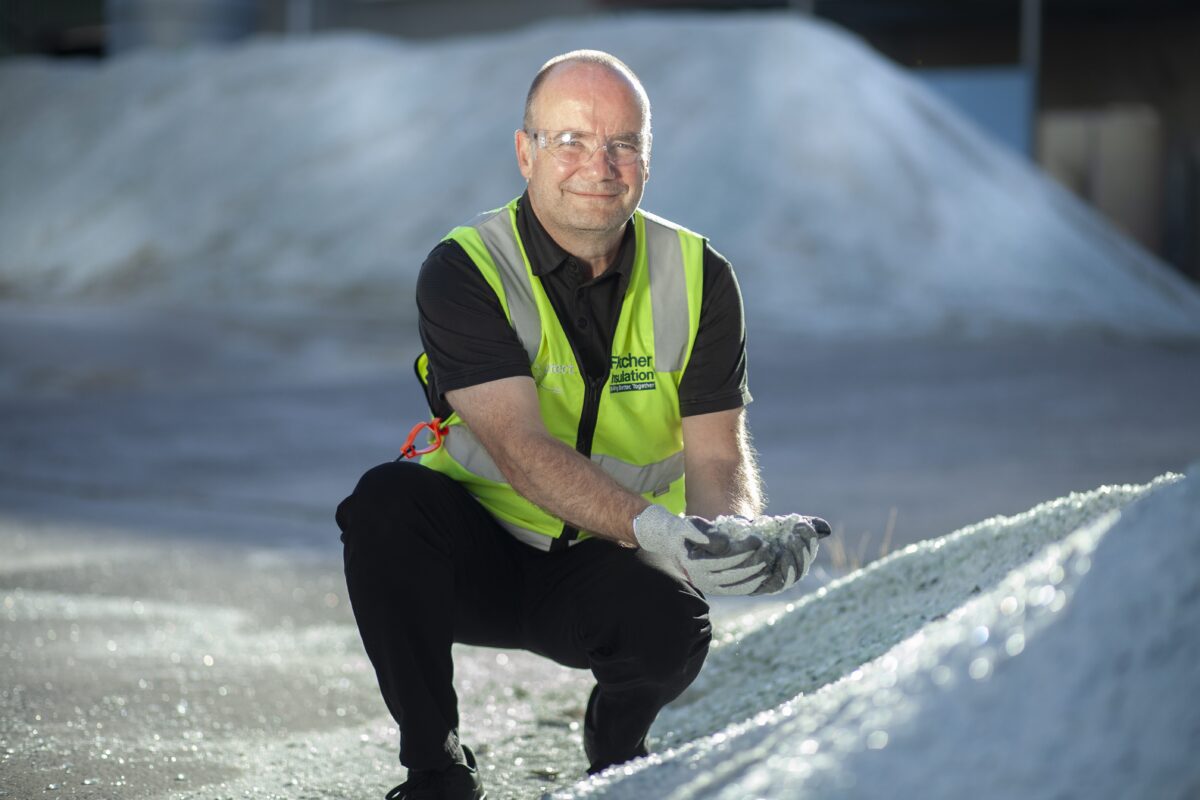
As Fletcher Insulation’s HSEQ Manager, Brian Parkes plays a key role in helping ensure our environmental responsibilities are embedded across our operations, products and decision-making.
With a focus spanning health, safety, environment and quality, Brian works closely with teams across the business to support responsible manufacturing practices, environmental compliance and continuous improvement initiatives.
We spoke with Brian about Fletcher Insulation’s approach to environmental responsibility, the role of recycled materials in our products and why transparency matters when it comes to sustainability.
How would you describe Fletcher Insulation’s approach to environmental responsibility?
Environmental responsibility is an important part of how we operate as a business.
At Fletcher Insulation, our approach is built on strong governance, responsible manufacturing practices and a commitment to continuous improvement. We recognise that environmental performance is not only about meeting obligations – it’s also about identifying opportunities to reduce waste, improve resource efficiency and support better outcomes for our customers and communities.
What role does sustainability play in our day-to-day operations and long-term direction?
Sustainability is becoming increasingly integrated into the way we think about our business and the decisions we make.
Across our operations, we continue to look for opportunities to improve environmental performance through initiatives that support resource efficiency, waste reduction and responsible manufacturing. Looking ahead, sustainability will continue to play an important role in how we plan, operate and deliver value for our customers.
We often reference that our Australian-made glasswool contains up to 80% recycled glass. Where does this material come from?
A significant proportion of the recycled glass used in our Australian-made glasswool insulation is sourced locally through Australian glass recycling streams.
This recycled glass is recovered and processed before being incorporated into our manufacturing process at Dandenong, helping divert valuable material from landfill and reducing reliance on virgin raw materials.
How is recycled glass used in the manufacturing process?
The recycled glass forms part of the glass batch used to manufacture glasswool insulation.
It is combined with other raw materials and processed through our manufacturing system to produce the glass fibres that form the basis of our insulation products.
What are the environmental benefits of using recycled glass?
Using recycled glass helps reduce the amount of material sent to landfill while supporting the circular use of resources.
It also reduces the demand for some virgin raw materials, helping conserve natural resources while delivering the performance customers expect from our insulation products.
Fletcher Insulation has Environmental Product Declarations (EPDs). What is an EPD and why is it important?
An Environmental Product Declaration, or EPD, provides independently verified information about a product’s environmental impacts across its life cycle.
EPDs help make environmental information more transparent and accessible, giving customers, architects, designers and specifiers a clear and consistent way to understand and compare products.
How do EPDs support sustainable building design?
EPDs provide environmental impact data that can assist informed material selection.
For architects, designers and specifiers, they offer a transparent basis for comparing products and understanding factors such as embodied environmental impacts, helping support sustainability objectives throughout the design process.
What steps are being taken to reduce the environmental impact of manufacturing?
Continuous improvement is an important focus for our manufacturing operations.
We are continually exploring opportunities to improve efficiency, reduce waste and optimise resource use. Recent initiatives have included projects focused on reducing energy consumption, increasing recycling and improving manufacturing processes through automation and operational improvements.
How do you manage water use and other resources at the Dandenong manufacturing facility?
Resource efficiency is an important consideration across our operations.
At Dandenong, water used within the manufacturing process is recycled and reused across a range of production activities, helping minimise consumption and support responsible resource management.
Beyond manufacturing, how do insulation products contribute to more sustainable buildings?
Insulation plays a vital role in building performance.
By helping maintain more consistent indoor temperatures, insulation can reduce the energy required for heating and cooling over the life of a building. This supports improved energy efficiency, occupant comfort, health outcomes and long-term building performance.
How do you ensure environmental claims are accurate and transparent?
Transparency is critical.
We support our environmental claims through recognised reporting frameworks, independently verified certifications and documented product disclosures, including Environmental Product Declarations.
Providing clear, evidence-based information helps customers make informed decisions and builds confidence in the products they specify and use.
Why is transparency important in the construction materials sector?
Buildings are expected to perform for decades, and the materials selected today can have a lasting impact.
Transparent environmental information enables better decision-making and supports greater accountability across the supply chain. It also helps the industry continue progressing towards more sustainable building outcomes.
Looking ahead, what are the key environmental priorities for Fletcher Insulation?
Our focus is on continuing to improve environmental performance across our operations while embedding sustainability more deeply into how we work as a business.
This includes supporting Fletcher Building’s Environmental, Social and Governance (ESG) framework, increasing engagement across teams and stakeholders, and identifying opportunities to improve resource efficiency, reduce waste and strengthen environmental management practices.
What does progress look like to you?
Progress means creating a shared understanding of how sustainability aligns with our purpose and values, while continuing to improve environmental outcomes across the business.
It is also about fostering collaboration, encouraging innovation and ensuring environmental considerations are part of everyday decision-making.
What are you most proud of so far?
I’m proud of the way the business is increasingly looking beyond compliance and recognising the broader value environmental responsibility can create.
There is growing engagement across the organisation, and it’s encouraging to see sustainability becoming part of conversations about how we operate, innovate and plan for the future.
What motivates you personally?
For me, it’s about contributing to something that has a positive long-term impact.
The decisions we make today can help shape the future for generations to come, and that’s a responsibility I take seriously. Being able to support meaningful environmental improvements, no matter how large or small, is what motivates me most.
Learn more
Explore our Environmental Product Declarations (EPDs) for independently verified environmental information to support informed material selection.